


Technology
Throughout the years, I found out about numerous gotchas and unusual distinctions in between keyboard handling on Mac and Windows– significant specifically to web apps, which utilize the exact same codebase to deal with both. I believed it may be valuable to somebody if I assemble them all in one location.
This post is suggested to be a referral, and there aren’t any adorable or captivating stories concealing within– if this appears uninteresting to you, do not hesitate to avoid to the next one!
Various names for secrets
What Windows calls Backspace, Mac calls Delete. What Windows calls Delete, Macs call Forward Delete. (This indicates stating “Delete” without defining the platform may in fact be puzzling.)
What Windows calls ⏎ Enter, Mac calls ⏎ Return. Macs likewise have an ⌤ Enter, although just on a numerical keypad (formerly, it was even there on laptop computers). On keyboards without the physical Enter crucial, you can replicate it through Fn+Return.
In many Mac software application, Enter and Return do the exact same thing. There are a couple of exceptions– for instance, Photoshop includes a brand-new line on Return however devotes on Enter, and some traditional professional apps like Cubase or Pro Tools do various things, too– however it appears to be a passing away custom. (If you wonder about the history of Return and Enter, I discussed it as soon as)
Windows usually calls the secondary essential Numpad Enter. I do not think Fn+Enter works to mimic it.
Usually, third-party keyboards utilize Windows terminology– so, Backspace and Enter. If a keyboard uses Mac conventions at all, they normally just encompass modifier secrets.
Modifier secrets
⌃ Control on Windows is the comparable to ⌘ Command on a Mac. (Paste, for instance, is ⌃ V on Windows and ⌘ V on a Mac.) Confusingly, Apple gadgets still have a Control secret, too. This was initially indicated for terminal applications, however nowadays numerous GUI apps utilize it as an additional modifier secret.
This indicates that for apps, Windows gadgets use Ctrl, Alt, and Shift– and Macs use ⌘ Command, ⌥ Option, ⌃ Control, and ⇧ Shift. That’s another modifier secret, and therefore more area to breathe. (We’re not counting the Windows secret or the Globe/Fn essential considering that those are technically booked by the os.)
Some keyboards provide additional essential caps you can switch to match the platform, for instance:
Others cover all the bases on repaired secret caps, in an uncomfortable method:
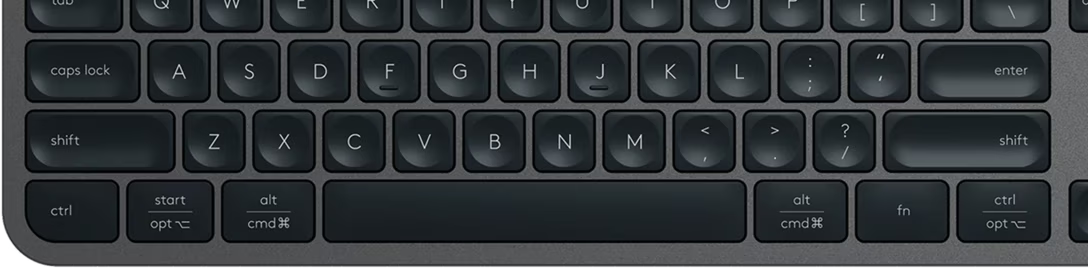
Numerous stick to Windows-only legends.
Words vs. signs
Apple gadgets rely more on signs on their secrets and in their menus, although they do not do so regularly. Here are all of them:
- ⇧ Shift
- ⌃ Control
- ⌥ Option
- ⌘ Command
- ⏎ Return
- ⌤ Enter
- Globe/Fn
- ⇥ Tab
- ⎋ Esc (not printed on keyboards, for some factor)
- ⌫ Delete
- ⌦ Forward Delete
- ⌧ Clear
- ≣ Contextual Menu(just on full-size keyboards)
- ⇞ Page Up(just on full-size keyboards)
- ⇟ Page Down( just on full-size keyboards )
- ↖ Home(just on full-size keyboards )
- ↘ End (just on full-size keyboards)
In fact, I lied about the last 4. On modern-day Apple keyboards, they are:
- ↑ Page Up
- ↓ Page Down
- ⤒ Home
- ⤓ End
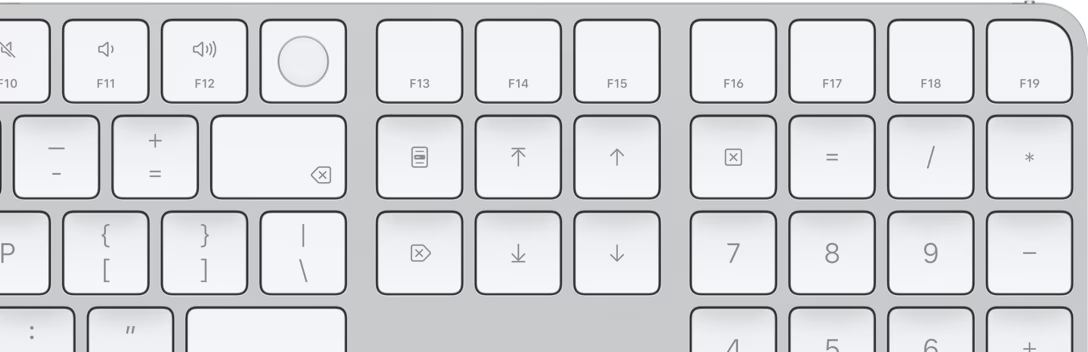
Recycling the routine arrows for Page Up and Down is among a couple of difficult choices from Apple’s keyboard designers. The arrow crucial signs appear like this– ◀ ▶ ▲ ▼– however just on Apple keyboards. Here is an older and a more recent Apple keyboard revealing what took place:
(Luckily, the complicated double arrow essential scenario just takes place on less popular, full-size keyboards.)
Historically, Apple keyboards utilized signs more on non-US keyboards, however beginning with the 2026 designs, they combined when they reveal signs and when they reveal signs and legends, throughout all keyboards. (The just essential with simply a text legend is Esc, making the look of ⎋ in menus additional confusing.)
Windows keyboards normally utilize words– this is why in tight quarters you often see shortenings like Ctrl, Bkspc, PrtSc, Del, PgUp, Win, and so on. (I do not believe Apple ever abbreviates their legends with the exception of Esc for Escape.) In some nations, the legends are equated– as an example, in Germany, Ctrl often looks like Strg.
The signs that crossed over to Windows side are:
- ⇧ for Shift
- ⇪ or a comparable sign for Caps Lock (on non-US keyboards)
- ⏎ for Enter– keep in mind the very same arrow as Mac’s ⏎ Return
- ← for Backspace– keep in mind a various arrow than Mac’s ⌫ Delete
- ⇥ for Tab (you can likewise often see ⭾, which is a sign representing Tab and Reverse Tab together; Reverse Tab utilized to be a different secret on some 1970s terminals)
- ⊞ for Windows secret– the design of the logo design will be various depending upon the age of the keyboard, approximately matching the Windows logo design at the time; some keyboards likewise utilize a more abstract shape, or call the crucial Start or System rather of Windows
- ≣ for contextual menu secret (a.k.a. Application Key)– simply as Apple included that secret on its big keyboards, Microsoft began eliminating it in favor of emoji essentialOffice essentialand after that Copilot crucial
- ⌃ for Control (particularly in unpopular contexts)
I have actually not seen any other popular signs on the Windows side of the aisle, and I am not even sure if the above would be extensively comprehended. Here’s an example:
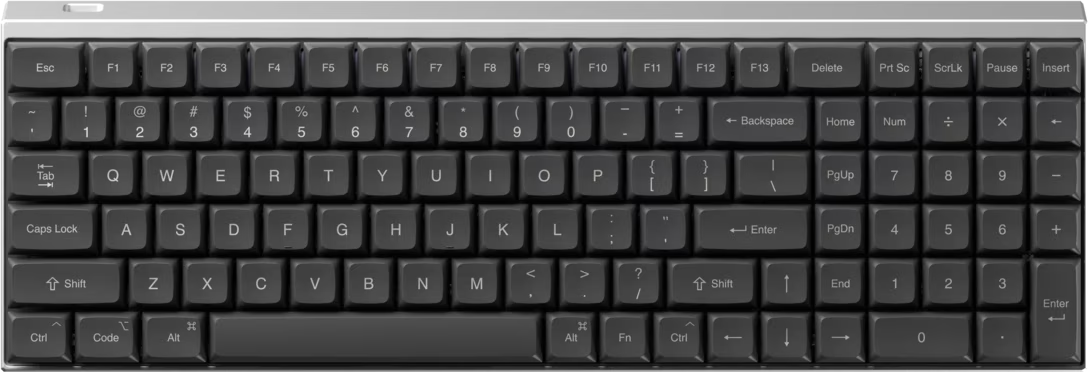
( I composed a bit more about Mac signs in the past, and likewise about the unusual Canadian signs.)
How to reveal faster ways
In menus and other locations, Windows signs up with the essential mixes/ faster ways with a plus, however Apple simply glues them together:
- Windows: Shift+A, Ctrl+Shift+G, Ctrl+F11, Alt+ Enter
- Mac: ⇧ A, ⌃ ⇧ G, ⌘ F11, ⌥ ⏎
Here is the exact same Chrome menu on Windows and on macOS:
(In other words, you ‘d never ever state” ⌃ V is Paste on Windows” like I did above. )
Function secrets
Both Windows and Macs have function secrets.
On Windows, generally those were declared by the os or the apps as faster ways. Here are some examples of widely known function crucial projects:
- Alt+F4– close the app
- F1– assistance
- F11– make the most of window
- F12– dev tools in web browsers
On Macs, generally the apps didn’t grab function secrets, as those were booked entirely for the users to do things with. (However, some mix of ⌃ and function secrets are utilized by the os for ease of access alternatives, and I sometimes see apps utilize function secrets nowadays.)
Windows keyboards complement at F12, however some Mac keyboards recycle the 3 unique PC secrets, and even take control of the unneeded Num Lock/ Caps Lock/ Scroll Lock island, and wind up increasing to F19:
Access to additional characters
In text fields, Apple has a system where pushing ⌥ with printing secrets outputs more characters, for instance ⌥ Q outputs œ, and ⌥ 7 outputs a ¶ pilcrow. In addition, ⇧ operates in this context, so for instance ⌥ ⇧ Q outputs Œ, and ⌥ ⇧ 7 outputs a ‡ double dagger.
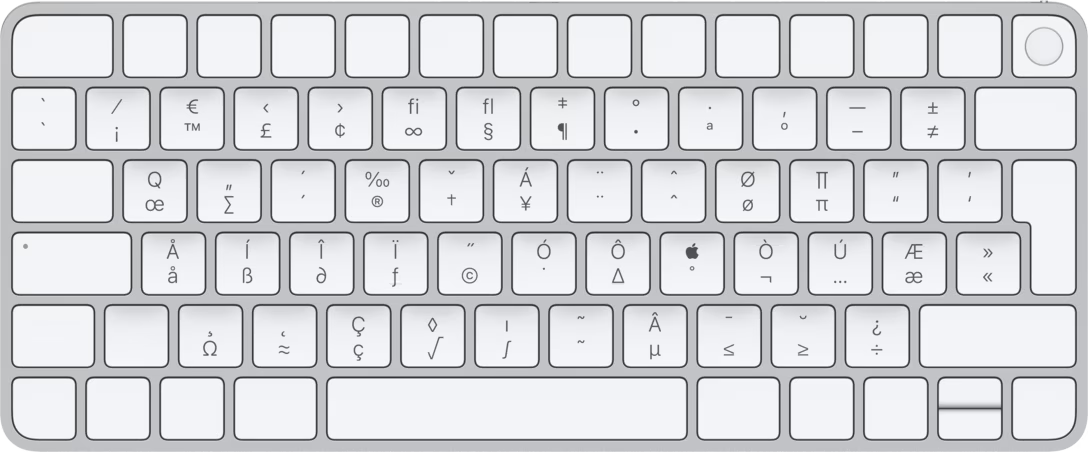
Keep in mind that not just letters, however generally all printing secrets have secret ⌥ and ⌥ ⇧ tasks.
⌥ tasks differ per area! The above was U.S. English, here’s Polish with a great deal of distinctions:
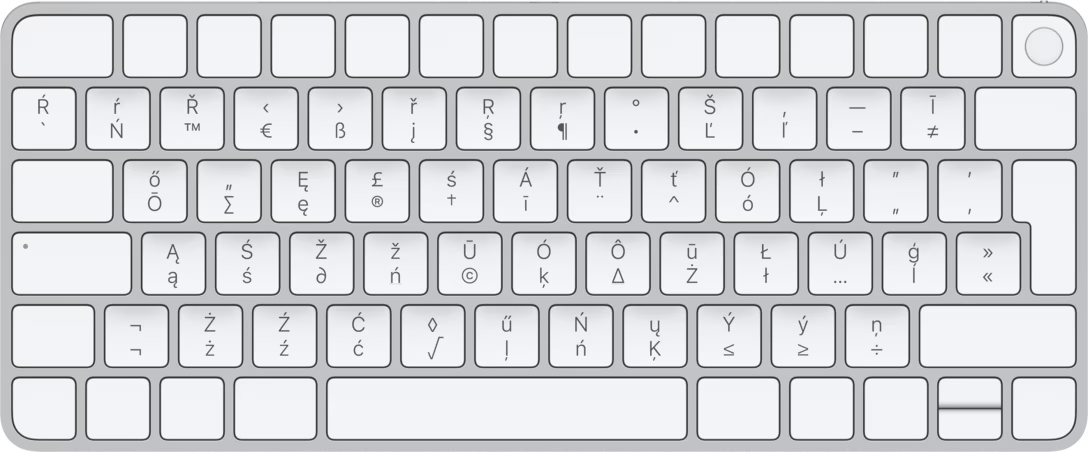
This implies it’s finest to prevent ⌥ -based faster ways in text fields, given that they may contravene some essential character.
By the method, while the above 2 are simply mock-ups, on some physical keyboards (here: British English), a few of the essential ⌥ invocations are really printed on secrets:
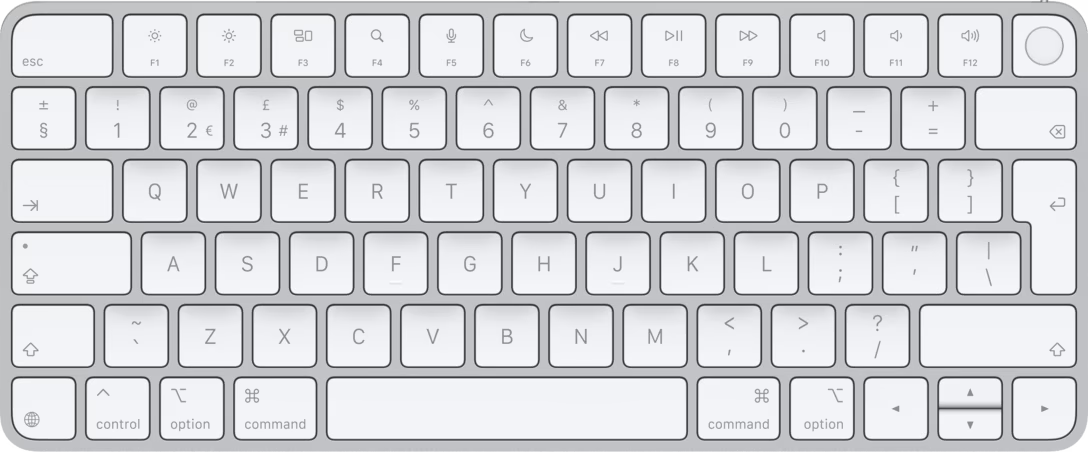
Windows does not have the above function. Windows has an alternative function where typing Alt+numpad secrets permits to get in any character by its code.( For example, Alt +0128 outputs EUR. Num Lock needs to be made it possible for. I do not believe it’s possible to do it without a numerical keypad present.)
Mac has a variation of this function, however it needs including Unicode Hex Input keyboard and changing to it in advance. Pushing ⌥ 20AC outputs EUR.
Alt secret on Windows
While Mac modifier secrets are totally balanced, Windows makes an exception for Alt. On numerous non-US keyboards, ideal Alt is likewise referred to as AltGrand does something comparable to ⌥ on a Mac: it outputs letters when pushed in mix with printing secrets.
On Polish keyboards AltGr+A=ą, AltGr+C=ć, AltGr+Shift+A=Ą, and so on with 15 more mixes. Lots of other keyboards do comparable things.
The method it varies from ⌥ on a Mac is that these are normally booked for core letters and punctuation needed for each language, instead of the typographical array that Apple offers.
For tradition factors, and likewise for keyboards that do not have a physical AltGr secret, you can likewise conjure up all these utilizing Ctrl+Alt mixes rather (so, Ctrl+Alt+A=ą). This indicates that simply as you need to beware about ⌥-based faster ways in text fields on a Mac, so you ought to be of Ctrl+Alt-based faster ways on Windows
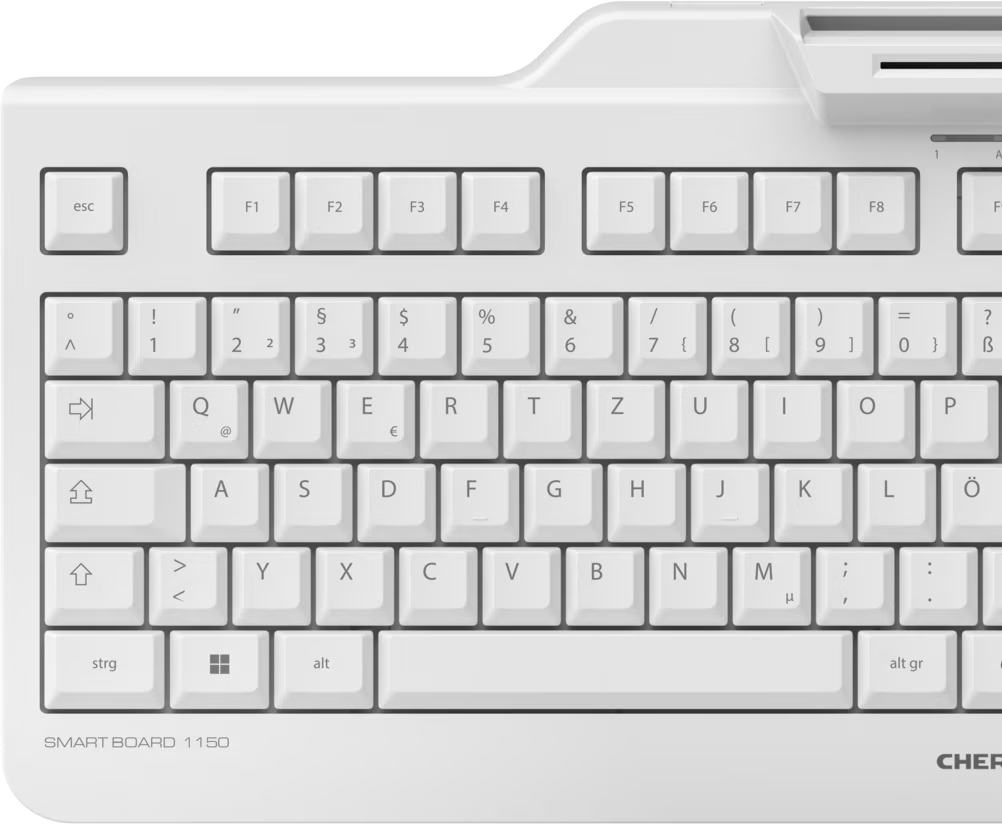
Similar to on Macs, on some keyboards, chosen AltGr alternatives will be printed in the corners or fronts of secrets:
Text fields
Text fields in Mac OS apps and web internet browsers/ sites utilize a few of the basic Unix/ Linux shortcuts based upon the ⌃ Control secret:
- ⌃ A– relocate to the start of the line
- ⌃ E– relocate to completion of the line
- ⌃ F– relocate to the right, or forwards(hold ⌥ to leap through words)
- ⌃ B– relocate to the left, or in reverse(hold ⌥ to leap through words )
- ⌃ N– move down or to the next command
- ⌃ P– go up or to the previous command
- ⌃ L– scroll the window so that the text cursor remains in the vertical middle
- ⌃ H– erase (backspace)
- ⌃ D– forward erase
- ⌃ K– erase (kill) to the end of the line
- ⌃ T– swap (transpose) the nearby characters
- ⌃ O– place brand-new line, however (contrary to Return) do stagnate the cursor there
You can integrate a lot of the above with holding ⇧ to extend the choice.
A little group of singing users enjoy these.
Windows still supports Shift+Delete for cut, Ctrl+Insert for copy, and Shift+Insert for paste. I am unsure the number of individuals utilize these.
On a Mac, in basic input fields, ↑ and ↓ leaps to the start and end (like ⌘ ← →). This frequently disputes with command line history, autocomplete pop-ups, and so on.
Windows does not have this convention, and Home and End serve this function rather.
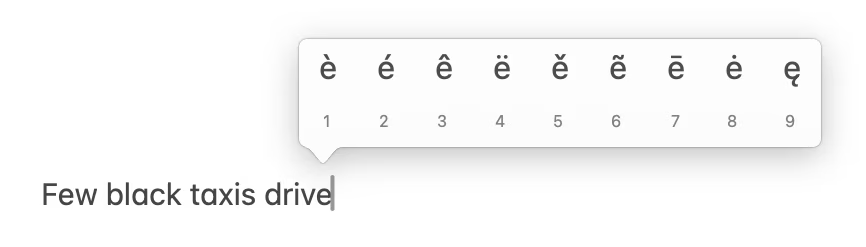
Macs support the iPhone-inspired convention of holding an essential to reveal associated accented characters, rather of setting off auto-repeat. Windows does not have this function.
Varying faster way conventions worth understanding about
On a Mac, renovate is normally ⌘ ⇧ Z. On Windows, it’s normally Ctrl+Y.
On a Mac, refresh(in internet browsers, and so on )is generally ⌘ R. On Windows, it’s generally F5, although some web browsers now support Ctrl+ R, too, probably because function secrets are more difficult to gain access to than they utilized to be.
Booked secrets
Windows’s eponymous ⊞ Windows secret is scheduled exclusively for making use of the os, therefore is Mac’s Fn/ Globe secret. (Although I am not 100% sure of that as I discovered one location you can produce faster ways as a user– I’m simply not specific if it’s deliberate.)
Each platform likewise has a lot of faster way mixes that are efficiently not available, for example ⌘ ⇥ and ⌘ M on a Mac, or Alt+Tab and Ctrl+Shift+Escape on Windows.
These main lists can assist:
- Mac keyboard shortcuts
- Keyboard faster ways in Windows
If you’re a web app, you will contend for faster ways with the os (like any app would), however likewise with the web browser itself. You can normally take control of faster ways like ⌘ S or ⌘ P, however depending upon the web browser or the platform, some may be spiritual and not available. No Mac web browser will enable a site to claim ⌘ Q, ⌘ W, or ⌘ T. Safari will not enable a web app to bypass ⌘ R. Arc internet browser will not permit to bypass ⌘ ⇧ C. (This is not a total list.)
Leaping around
Tabbing and Shift tabbing is usually utilized to leap in between UI components, however it acts somewhat in a different way in native apps.
On Windows, tabbing dives through all aspects:
On Mac, Tab leaps just to components that need keyboard to run(such as input fields). You can toggle a System Settings choice and ask macOS to imitate Windows behaviour– see the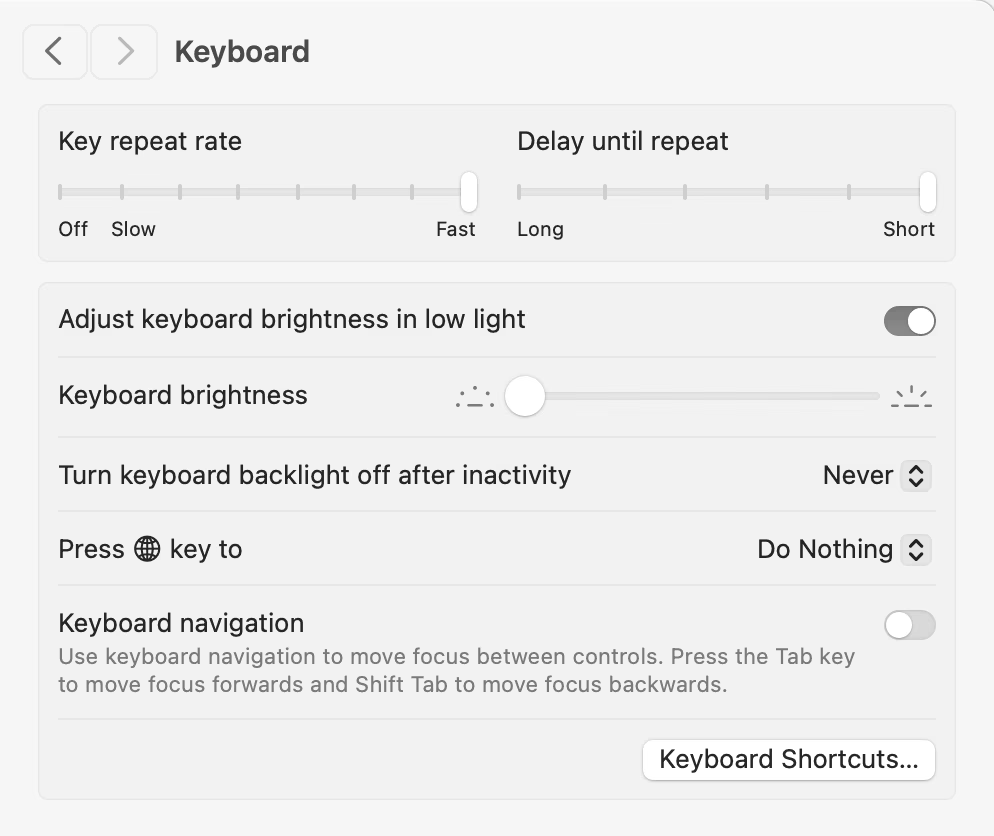 last toggle listed below– however it’s not supported well all over.
PgUp and PgDn work in a different way:
- On Windows, they move the text cursor a screen up or down.
- On a Mac, they scroll the view up and down, however they do stagnate the text cursor if it’s present (so, they are more an equivalent of clicking the scrollbar chute ).
Home and End work in a different way:
- On Windows, they scroll the contents (and move the cursor if present) to the leading or the bottom of a view, or move the cursor to the start or completion of an input field.
- On a Mac, in views they scroll to the start or end without moving the cursor. In input fields, Home/End not do anything, however you can utilize ⌘ ← → to achieve the exact same.
On both platforms, Fn + ↑ ↓ does PgUp/ PgDn, and Fn + ← → does Home/End.(Do you see how complicated it is to state that considered that ↑ ↓ currently indicate PgUp/Dn on a Mac?)
Windows has a custom of allowing access to menus and noticeable controls by pushing Alt and letter secrets. This has actually progressed gradually and is not as constant as it utilized to be, however it may be worth understanding about.
Less popular secrets
On a 100-plus-key keyboard, Windows may have:
- Place– still utilized in some contexts for overtyping
- Print Screen– today taken control of by screenshotting
- Num Lock and Scroll Lock
- Time out/ Break
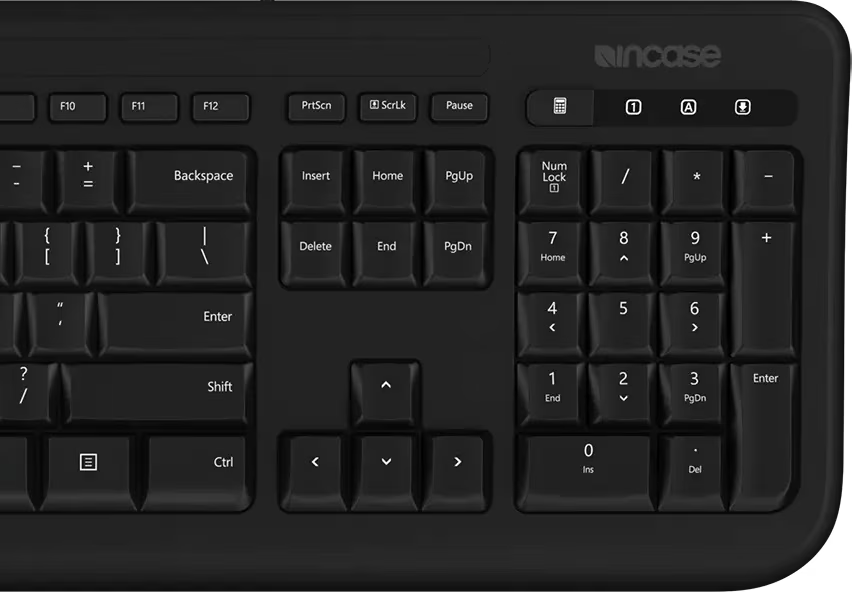
Macs have:
- Assist– hardly ever utilized, and now deserted in favor of …
- ≣ Contextual Menu– reveals the exact same menu as ideal click would
- ⌧ Clear– a deterministic backspace, nowadays seldomly various than the real Delete crucial
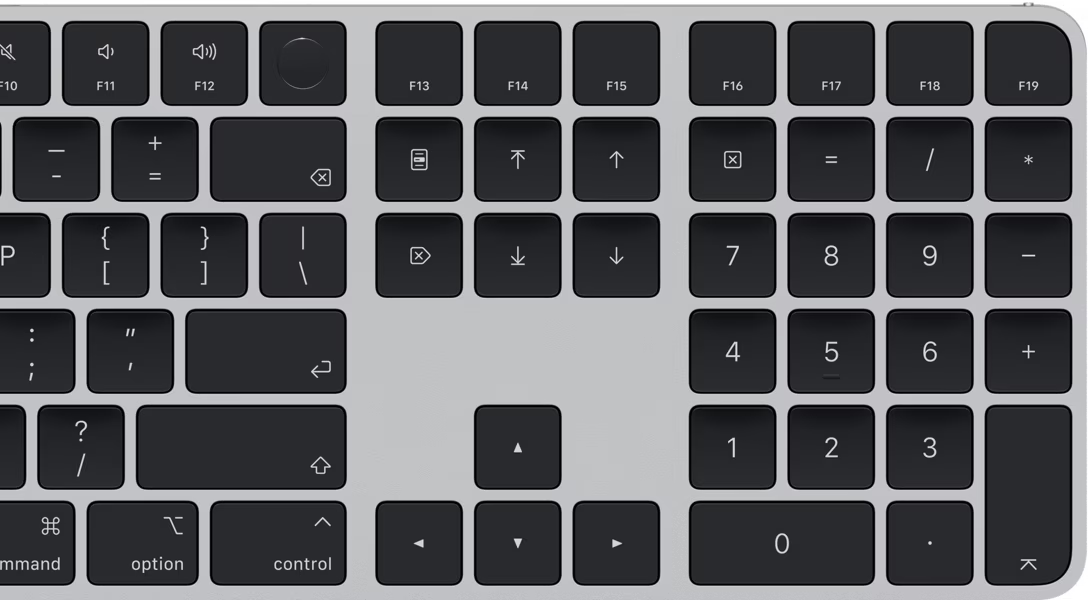
Macs never ever had arrow secrets on a numerical keypad nor a Num Lock secret to allow it. (I’m breaking my pledge! Here’s an enjoyable bug story about Num Lock)
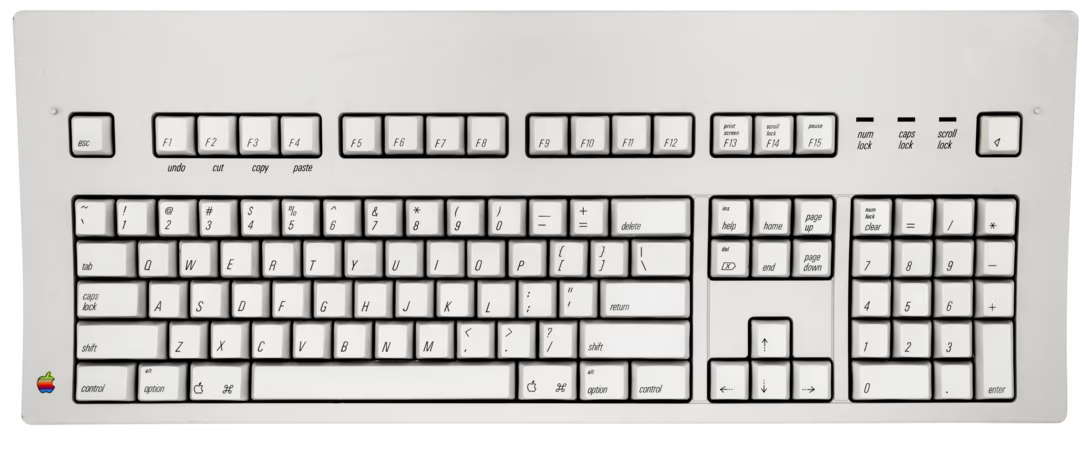
In an odd twist of fate, it’s not just third-party keyboards that prefer Windows legends. A few of Apple’s keyboards in between 1980s and 2000s revealed PC legends, too! (This was to court PC compatibility of then-beleaguered Macs.) Here’s the timeless Apple Extended Keyboard, revealing legends for Insert, Delete (calling it Del to prevent confusion with its own), Print Screen, Scroll Lock, Pause, Num Lock, and Alt:
Did I miss out on anything or slip up? Let me understand!
Discover more from PMN S.P.O.R.T.S - A PRIME MEDIA NETWORK BRAND
Subscribe to get the latest posts sent to your email.



