Technology news
https://npr.brightspotcdn.com/dims3/default/strip/false/crop/5250×3615+0+0/resize/400/quality/85/format/webp/?url=http%3A%2F%2Fnpr-brightspot.s3.amazonaws.com%2F00%2F8a%2F18a07f2b4b03ad943ddbb3cb4b52%2Fgettyimages-2296121876.jpg 400w, https://npr.brightspotcdn.com/dims3/default/strip/false/crop/5250×3615+0+0/resize/600/quality/85/format/webp/?url=http%3A%2F%2Fnpr-brightspot.s3.amazonaws.com%2F00%2F8a%2F18a07f2b4b03ad943ddbb3cb4b52%2Fgettyimages-2296121876.jpg 600w, https://npr.brightspotcdn.com/dims3/default/strip/false/crop/5250×3615+0+0/resize/800/quality/85/format/webp/?url=http%3A%2F%2Fnpr-brightspot.s3.amazonaws.com%2F00%2F8a%2F18a07f2b4b03ad943ddbb3cb4b52%2Fgettyimages-2296121876.jpg 800w, https://npr.brightspotcdn.com/dims3/default/strip/false/crop/5250×3615+0+0/resize/900/quality/85/format/webp/?url=http%3A%2F%2Fnpr-brightspot.s3.amazonaws.com%2F00%2F8a%2F18a07f2b4b03ad943ddbb3cb4b52%2Fgettyimages-2296121876.jpg 900w, https://npr.brightspotcdn.com/dims3/default/strip/false/crop/5250×3615+0+0/resize/1200/quality/85/format/webp/?url=http%3A%2F%2Fnpr-brightspot.s3.amazonaws.com%2F00%2F8a%2F18a07f2b4b03ad943ddbb3cb4b52%2Fgettyimages-2296121876.jpg 1200w, https://npr.brightspotcdn.com/dims3/default/strip/false/crop/5250×3615+0+0/resize/1600/quality/85/format/webp/?url=http%3A%2F%2Fnpr-brightspot.s3.amazonaws.com%2F00%2F8a%2F18a07f2b4b03ad943ddbb3cb4b52%2Fgettyimages-2296121876.jpg 1600w, https://npr.brightspotcdn.com/dims3/default/strip/false/crop/5250×3615+0+0/resize/1800/quality/85/format/webp/?url=http%3A%2F%2Fnpr-brightspot.s3.amazonaws.com%2F00%2F8a%2F18a07f2b4b03ad943ddbb3cb4b52%2Fgettyimages-2296121876.jpg 1800w” data-template=”https://npr.brightspotcdn.com/dims3/default/strip/false/crop/5250×3615+0+0/resize/width/quality//format//?url=http%3A%2F%2Fnpr-brightspot.s3.amazonaws.com%2F00%2F8a%2F18a07f2b4b03ad943ddbb3cb4b52%2Fgettyimages-2296121876.jpg” type=”image/webp”>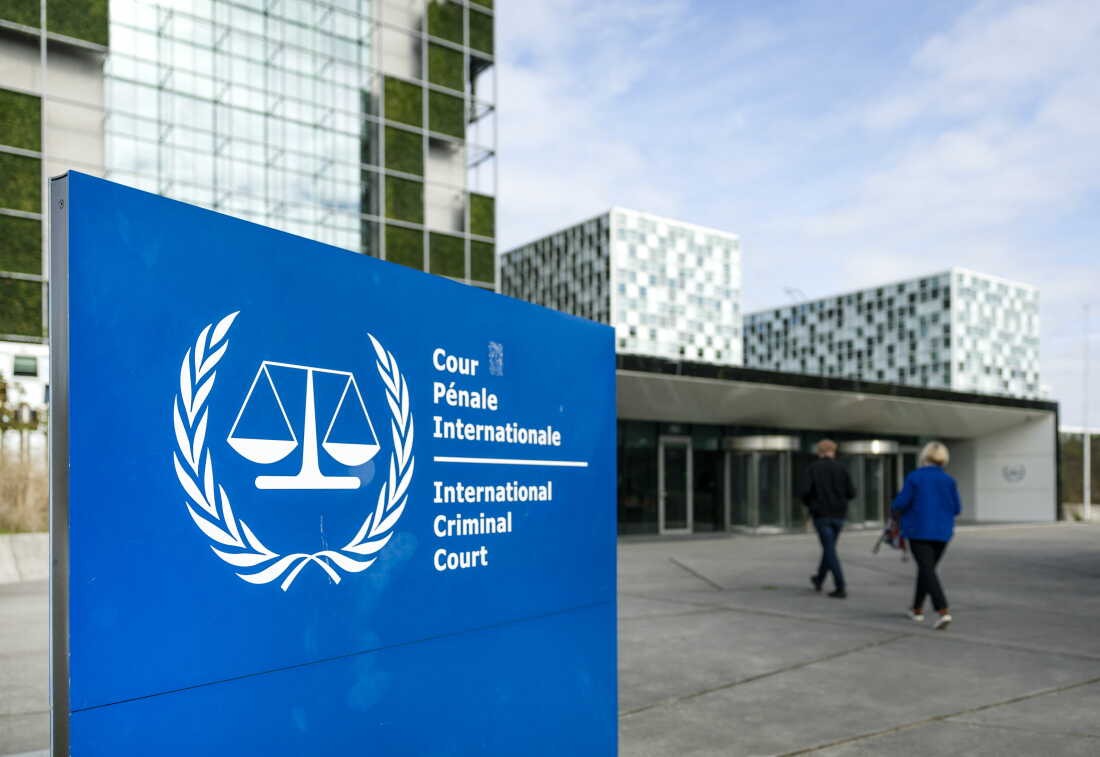
The International Criminal Court in The Hague on Sept. 23. Remko de Waal/ANP/AFP by means of Getty Images
conceal caption
Remko de Waal/ANP/AFP by means of Getty Images
If you wish to see how far U.S. sanctions can reach, ask Kimberly Prost’s Alexa.
After the United States approved her, the Canadian judge at the International Criminal Court started losing access to services from business in various nations. Her charge card were likewise canceled.
“You start to lose services from American companies, Amazon, Google, potentially Apple, whatever it may be,” she informed Early morning Edition “Completely randomly, though, you don’t know when something’s going to happen.”
Among those minutes came throughout a regular minute in your home.
“I went home and Alexa wouldn’t talk to me,” she informed NPR’s Steve Inskeep.
Her charge card, provided in the Netherlands and Canada, were canceled. She has actually handled to keep some savings account, however states her banking services are exceptionally minimal and even little transfers can be obstructed.
The sanctions themselves are American. Still, organizations abroad might comply due to the fact that they have ties to the U.S.
“We have this massive overcompliance by companies,” she stated.
Among the most severe examples is her medical insurance. Prost gets protection through AXA, the French business that supplies insurance coverage for the court. She states the business has actually declined to pay her claims despite the fact that it is not lawfully needed to follow the U.S. sanctions.
“It’s a business decision,” she stated.
Her phone still works– “so far” — however some e-mail, cloud and other innovation services are restricted.
She has actually coped with the limitations for more than a year.
Why was she approved?
Prost stated her sanction comes from Trump’s executive order targeting ICC authorities associated with cases worrying Israel and Gaza or Afghanistan.
Her own case returns 6 years.
At the time, Prost was briefly serving on the ICC’s Appeals Chamber when district attorneys looked for permission to open an examination into supposed criminal activities linked to the war in Afghanistan. Prost and 4 other judges all authorized the demand.
The examination covered supposed criminal offenses including the Taliban and ISIS and included what Prost referred to as “a small component related to the United States.”
That U.S. part was never ever pursued and was later on deprioritized by district attorneys, she stated.
“And it is for that decision that I’m sanctioned,” Prost stated.
Her function was judicial, not investigative. She stated the appeals judges were needed to choose whether district attorneys had the appropriate legal basis and jurisdiction to continue– comparable, she stated, to a judge licensing a search warrant.
“There is no investigation related to the American component in Afghanistan, and I have nothing to do with the Israel-Gaza situation,” Prost stated.
Her classification came in the middle of a much broader conflict in between Washington and the ICC that heightened after the Oct. 7, 2023, Hamas-led attack on Israel and the occurring war in Gaza.
For Prost, the more comprehensive issue is what sanctions like these mean for judges on worldwide courts making choices from the bench.
“We are judges, and we are being told that rather than deciding our cases on the basis of the facts and the law before us, as we are duty bound to do, we’re being asked to decide the cases or not decide them in accordance with the wishes of the U.S. government,” she stated.
By August 2026, 9 of the court’s 18 judges were under U.S. sanctions, in addition to both deputy district attorneys, its previous district attorney and one employee.
The Trump administration has actually threatened to go even more, revealing what it called a “whole-of-government campaign” to “systematically dismantle” the ICC over its examinations including Americans and Israelis.
NPR connected to the State Department for additional information about whether and when the administration prepares to enforce extra sanctions on the court. The department did not react.
Prost is challenging the sanction in U.S. court. In June, she and fellow ICC judges Reine Alapini-Gansou and Solomy Balungi Bossa took legal action against President Trump and other administration authorities in federal court in New York, arguing that the steps were illegal.
The work goes on in The Hague
In the meantime, the sanctions have actually altered how she lives outside the courtroom, however not the work she continues to do inside it.
Her present case includes supposed criminal activities connected to the jihadist takeover of Timbuktu in Mali, consisting of persecution, abuse and inhumane treatment.
“I will never quit my job as a judge,” Prost stated. “These methods that they’re using, these coercive measures, are completely futile.”
She stated she and other approved judges and district attorneys continue to do their tasks “objectively, independently and in accordance with the oath that we’ve taken.”
The radio interview was produced by Ava Pukatch, and the web variation was modified by Treye Green.
Discover more from PMN S.P.O.R.T.S - A PRIME MEDIA NETWORK BRAND
Subscribe to get the latest posts sent to your email.