


Current affairs
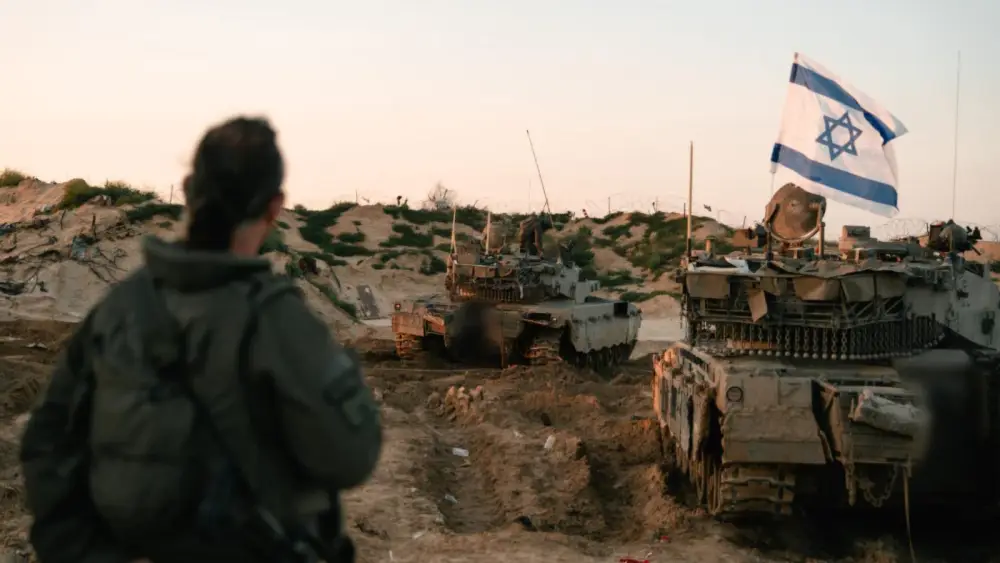
(Oct. 1, 2026/ JNS)
The Israel Defense Forces on Thursday provided an in-depth defense of claims made in the documentary “NAZA,” implicating its filmmakers of providing a “distorted, deceptive and disingenuous” account of how the military chooses and strikes targets in the Gaza Strip.
The documentary includes confidential statement from 24 Israeli military and intelligence workers and declares that the IDF utilized intelligence systems and expert system in manner ins which added to civilian deaths in Gaza. Interviewees likewise declare that the military intentionally targeted civilians and allowed great deals of civilian casualties in attacks on terrorist operatives.
The IDF turned down those claims, stating the movie’s narrative “is based upon considerable accurate mistakes originating from manipulative misstatements of truth.”
According to the military, binding IDF regulations compare terrorists and uninvolved civilians, restrict intentionally targeting civilians and need leaders to decrease the threat of civilian damage to the best level practical.
The IDF stated it had actually never ever prepared, authorized or performed a strike in Gaza in which 500 civilians, or anything approaching that number, were anticipated to be eliminated, contrary to
It likewise turned down claims that expert system separately chooses targets for attack.
“Artificial intelligence has actually never ever individually chosen targets to strike in the IDF,” the armed force stated.
According to the IDF, licensed intelligence officers determine prospective targets, pertinent experts prepare strikes, and functional leaders make the decision on whether to attack.
IDF turns down claims about ‘Lavender’
The armed force likewise challenged the movie’s characterization of “Lavender,” a synthetic intelligence-assisted system utilized by Israeli intelligence.
‘Lavender’ is not a database of targets authorized to strike, however a database that helps intelligence experts,” the IDF stated.
The military rejected that its guidelines developed automated civilian-casualty limits, consisting of claims pointed out in the movie that strikes versus junior terrorists might instantly be authorized when 20 civilians were at danger, or that 200 civilians might be threatened in an attack on a senior leader.
The IDF likewise declined the contention that as soon as civilians were alerted to leave a location, soldiers were totally free to strike without thinking about those who stayed.
The armed force stated evaluations of possible civilian casualties stay part of the targeting procedure after evacuation cautions have actually been provided.
The IDF even more declined claims that it stopped working to analyze the consequences of strikes, stating it had actually examined numerous events throughout the war, consisting of cases including unintentional civilian casualties, to identify what took place and draw functional lessons.
It acknowledged that errors took place throughout complex fight operations and stated presumed infractions of Israeli or worldwide law are taken a look at and, when called for, can result in disciplinary procedures or criminal examinations.
‘Only minimal, preliminary phases’
Among the documentary’s basic drawbacks, according to the Israeli armed force, was its dependence on intelligence workers who recognized with only part of the targeting procedure.
The interviewees referred to as having actually served in intelligence functions “normally describe just restricted, preliminary phases handling intelligence, instead of the much wider procedure of preparation and authorizing strikes,” according to the IDF.
The documentary mostly left out the functions of functional organizers, civilian-harm mitigation experts, legal consultants and leaders who eventually authorize or decline strikes, according to the armed force.
It stated such treatments have actually led to needs for extra intelligence, modifications to assault strategies, the choice of various weapons and the cancellation of strikes due to the fact that of the threat to civilians.
The armed force likewise implicated the filmmakers of stopping working to supply enough context about the war, consisting of the Hamas massacre in southern Israel on Oct. 7, 2023, and Hamas’s usage of civilian locations for military functions.
It stated the movie left out procedures used by the IDF to lessen civilian casualties, consisting of evacuation cautions, the choice of munitions, modifications to strike strategies and the assistance of humanitarian help.
‘Collateral damage’
The IDF likewise contested the documentary’s treatment of the term “civilian casualties.”
“NAZA” is stemmed from the Hebrew acronym for”nezek agavi,” or civilian casualties.
Examining the anticipated incidental damage to civilians from an attack on a military target is needed under global law and is planned to assist leaders identify whether an attack is legal and whether extra safety measures are needed, kept in mind the IDF.
The movie rather depicts the procedure of approximating prospective civilian damage as proof of indifference to civilian lives, the declaration continued.
The military acknowledged the ethical problem explained by a few of the movie’s interviewees.
“Decisions that might cost civilian lives are amongst the hardest soldiers and leaders deal with, and the IDF anticipates its soldiers to feel that weight and act appropriately,” it stated.
It included, that ethical concern does not in itself show that a choice was illegal.
The IDF implicated the filmmakers of utilizing manipulative modifying, leaving out appropriate context and making “careless allusions to historic atrocities.”
It stated it stayed open up to “authentic criticism” and to analyzing corroborated accusations of misbehavior.
The armed force likewise kept in mind that the filmmakers had actually not sent their accusations to the IDF for assessment and reaction before the documentary was launched, and had actually not supplied the military with a copy after release, regardless of demands.
The IDF stated its in-depth reaction was for that reason ready based upon an account supplied by an agent who participated in a public screening, in addition to other openly readily available accounts.
“NAZA,” directed by Israeli filmmakers Yuval Abraham and Rachel Szor and produced by The Guardiangot a Special Jury Prize at the Venice Film Festival.
Discover more from PMN S.P.O.R.T.S - A PRIME MEDIA NETWORK BRAND
Subscribe to get the latest posts sent to your email.



